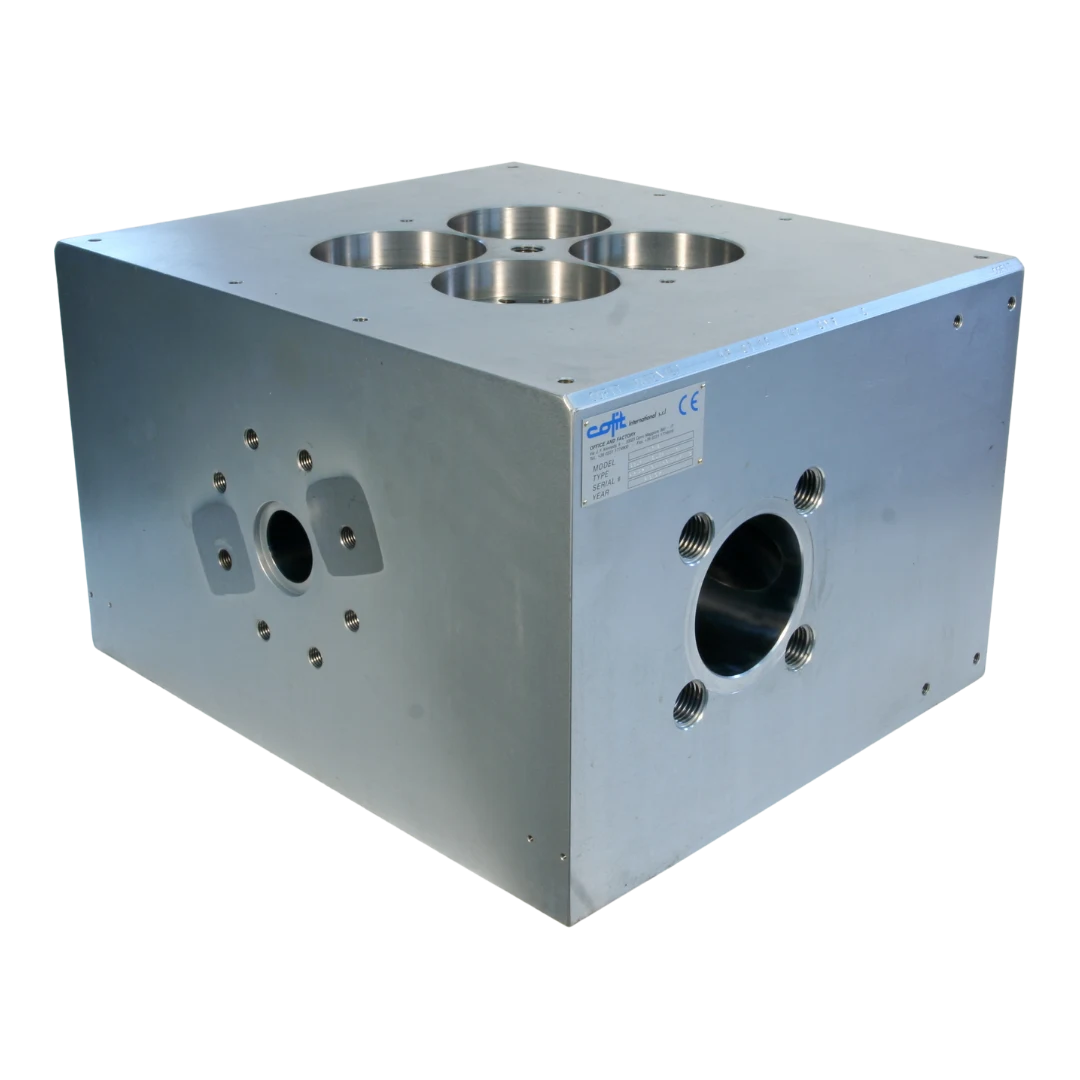
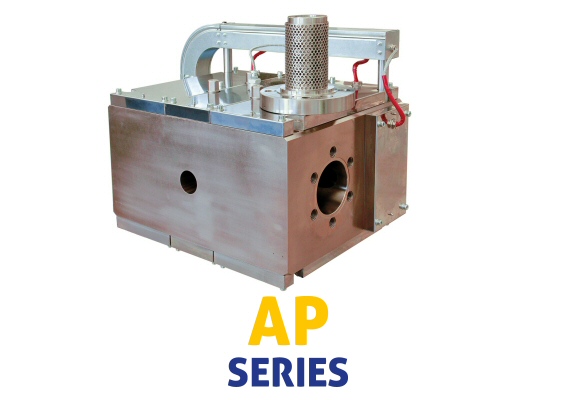
Ap screen changer

Continuous Self-Cleaning Filtration for Plastic Extrusion

The AP screen changer delivers continuous, self-cleaning melt filtration — maintaining stable melt pressure within ±2% without stopping your extrusion line. Designed for low to medium-contamination polymers across film, sheet, fiber, and coating applications.

Calculate Your Annual Output Recovery Contact Us

Why Manual Screen Changes Are a Production Risk

In high-output extrusion, every manual screen change is a recurring production event with a measurable cost. According to Plastics Technology, unplanned extrusion downtime costs between $200 and $500 per line-hour. On a line making two to four changes per shift, that is 45–135 minutes of lost production — every single day.

15–30 min
lost production per screen change

±5–10%
melt pressure spike at restart — causing gauge variation and scrap

+5–15%
OEE improvement switching from manual to continuous filtration

Up to 90%
reduction in unplanned downtime with continuous self-cleaning filtration
Start Production Simulation

Continuous Filtration Without Compromise

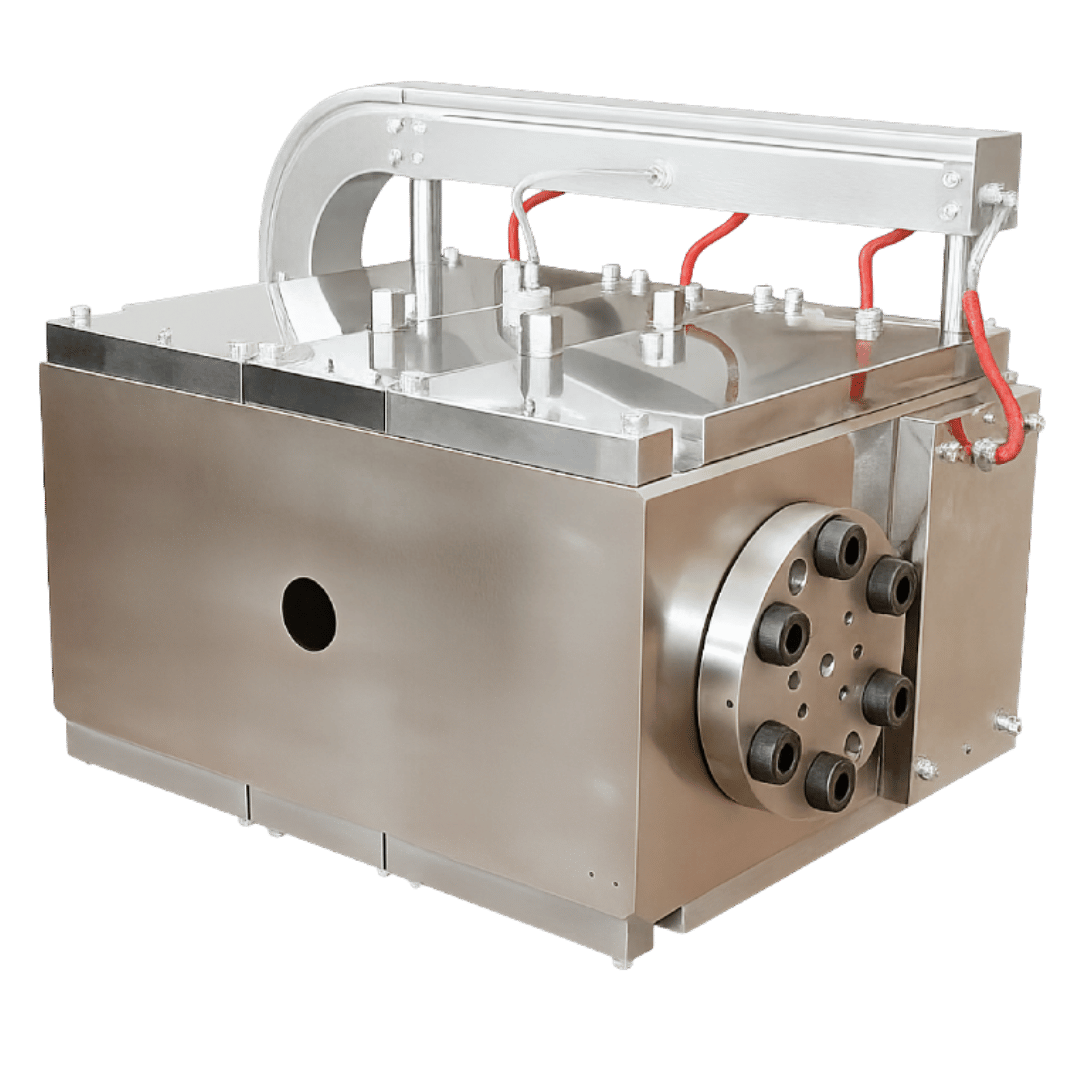
AP screen changer is a convenient, long-lasting solution for low to medium-contaminated materials

1 — Self-cleaning
Protected by Cofit patent

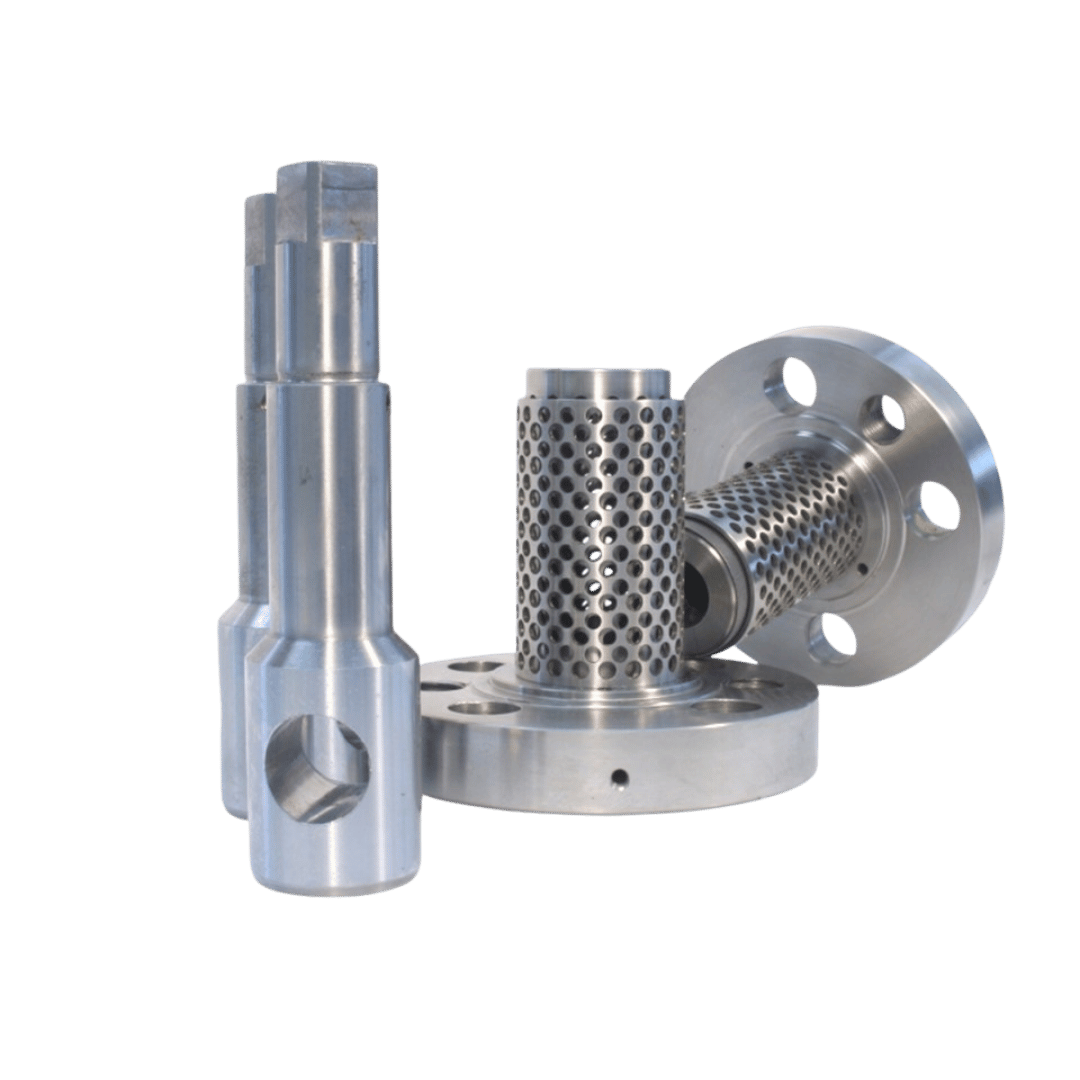
AP filter cartridges are cleaned without being removed from the block. The cleaning cycle is triggered automatically by differential pressure (ΔP) or by timer — no operator intervention required. Melt pressure remains within ±2% throughout the cycle.

2 — Continuous
No production stops

AP filtering cartridges can be cleaned and replaced without production interruption. The extrusion line runs throughout — no restart cycles, no pressure spikes, no scrap at changeover. Filtration fineness is maintained down to 3 μm continuously.

3 — Convenient
No expensive control units

AP does not require any expensive control panel or hydraulic control units — unlike many competing continuous screen changer designs. The self-cleaning mechanism is integrated and mechanically simple, reducing installation cost and maintenance complexity.

Contact Us

Designed for Demanding Applications

AP is optimized for low to medium contamination materials in film, sheet, fiber and most continuous applications where melt quality and uptime are critical.

BOPP Film

Cast Film

Blown Film

Fiber Production

Nonwoven

Nylon

Tapes

Cellulose

Blow Moulding

Sheet Extrusion

Wire & Cable

Pipes

Extrusion Coating

Compounding

For application-specific filtration guides: Blown Film Filtration  ·  Sheet Extrusion Filtration  ·  PET Recycling Filtration

Key Process Benefits

Quantified operating data from AP Series installations across European and North American extrusion operations.

±2%
Melt pressure stability
Throughout the self-cleaning cycle — eliminates gauge variation and bubble instability
Up to 90%
Downtime reduction
Vs manual screen changers on lines running >2 changes per shift
3 μm
Minimum filtration fineness
Maintained continuously — including fiber spinning, optical film, and food-contact applications
+5–15%
OEE improvement
Overall Equipment Effectiveness gain versus manual or hydraulic screen changing

Technical Data

Parameter Specification Notes
Filtration type Continuous, self-cleaning Ensures uninterrupted operation and automatic contaminant removal
Cartridge system Dual parallel cartridges Parallel configuration allows continuous filtration during screen change
Filtration fineness Down to 3 μm Maintained continuously — no interruption at any fineness level
Cleaning cycle trigger ΔP (differential pressure) or timer Automated — no operator intervention required during cleaning cycle
Material compatibility Low to medium-contamination polymers Suitable for recycled materials with moderate impurity levels
Max operating temperature Up to 350°C Designed for high-temperature polymer processing
Max operating pressure Up to +500 bar Suitable for high-pressure extrusion applications
Throughput range 5 – 2,000 kg/h Wide operating range depending on configuration and material
Filtration area Multiple sizes available Adaptable based on throughput and contamination level
Screen change Without production interruption Continuous operation with no downtime during screen replacement

AP Series or Gorillabelt? How to Choose

Both are continuous screen changers — neither stops the line for screen maintenance. The choice depends on the contamination level of your incoming polymer. Here is the decision framework in two columns.

AP Series
Choose AP when:
  • Polymer contamination is below ~3–4% by weight
  • You process virgin, regrind, or low-PCR-content polymer (up to ~30% recyclate)
  • Application requires fine filtration down to 3 μm — film, fiber, sheet, coating
  • Melt pressure stability is critical — blown film, cast film, optical sheet, fiber spinning
  • You need compact installation with no hydraulic control unit
Contamination level handled: up to ~3–4% by weight
Gorillabelt
Consider Gorillabelt when:
  • Contamination exceeds 3–4% by weight — PCR streams, industrial waste
  • You process post-consumer recyclate above ~30% content
  • Hard particles are present — metal, glass, ceramic, aluminium foil
  • You need a pre-filtration primary stage ahead of a fine secondary filter
Contamination level handled: up to 10% by weight
See Gorillabelt specifications →

Still unsure? See the full continuous vs discontinuous screen changer guide →

Resources

Download AP screen changer brochure

Download

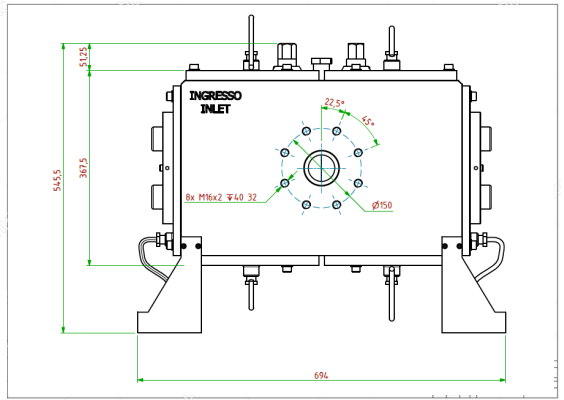
Download AP screen changer layout drawings

Download

Videos

3D Animation

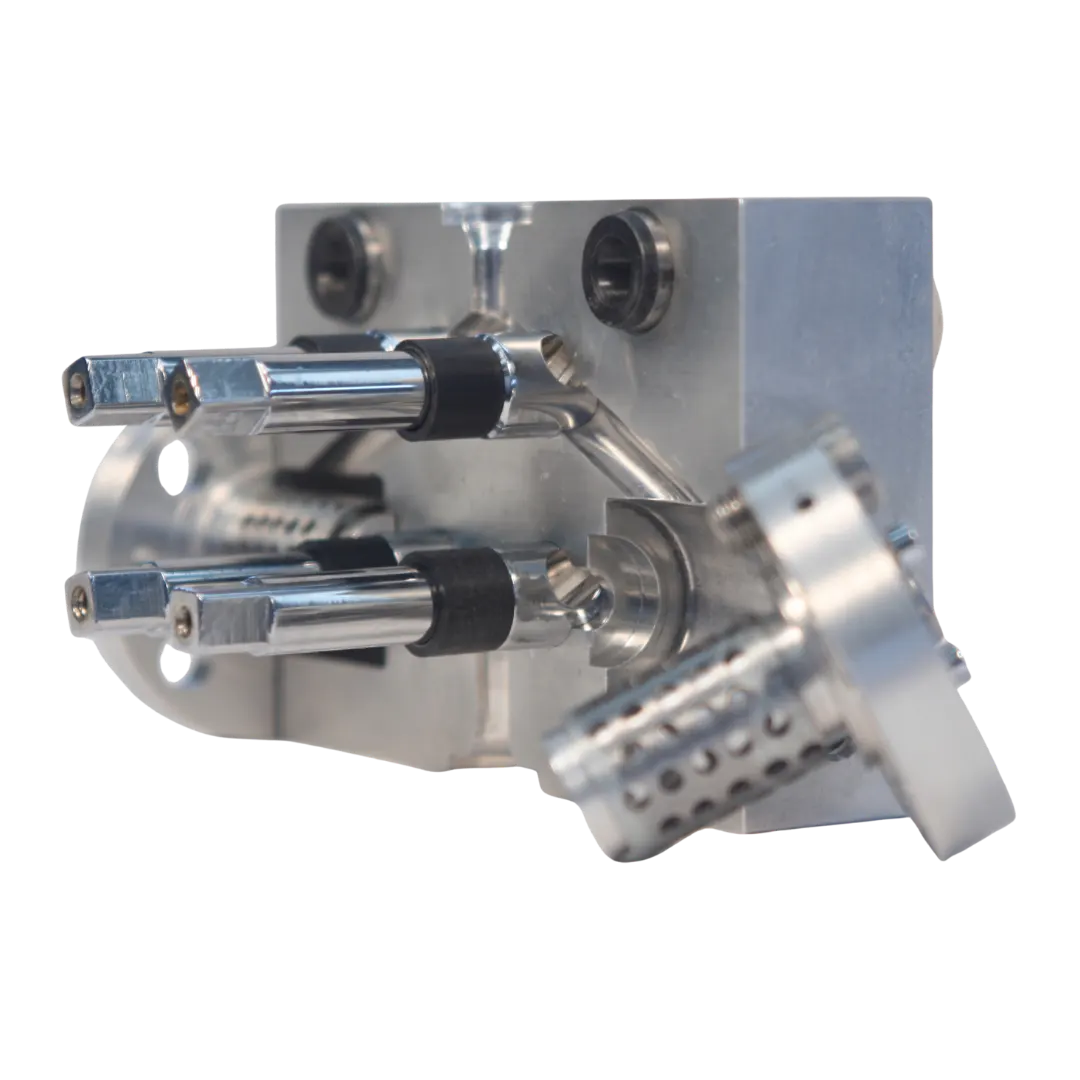
Watch an AP 3D animation: the filtering unit, valves and gaskets, inside AP body, self-cleaning operation

AP Valve Setup

AP set-up: watch how to perform valve adjustment.

Replace AP Gaskets

Watch how to execute AP gasket replacement.

Frequently Asked Questions

The AP screen changer uses a patented self-cleaning mechanism that removes the accumulated filter cake from the cartridge screen surface while the cartridge remains inside the filter housing and melt continues flowing. The cleaning cycle is triggered automatically — either when differential pressure (ΔP) across the filter reaches a set threshold, or on a timed interval. During the cleaning cycle, melt continues flowing through the parallel cartridge at stable pressure. No screen is removed, no operator action is required, and melt pressure remains within ±2% throughout.

The AP screen changer achieves filtration fineness down to 3 μm — maintained continuously without line interruption. This covers the full range of industrial polymer filtration requirements: standard film and sheet at 100–200 mesh, high-clarity film and fiber spinning at 250–400 mesh, and specialty applications requiring sub-10 μm filtration. For mesh-to-micron conversions, see the Mesh-to-Micron Converter.

No. Unlike many continuous screen changer designs that require hydraulic actuators and a dedicated control panel, the AP operates without any external hydraulic control unit. The self-cleaning mechanism is integrated within the filter housing. This reduces installation cost, eliminates hydraulic maintenance overhead, and simplifies line layout — particularly relevant for retrofitting an existing line.

The AP screen changer is suitable for virtually all thermoplastic polymers: polyolefins (LDPE, LLDPE, HDPE, PP), engineering polymers (PET, PA, PC, PMMA, ABS), elastomers, biopolymers, and specialty compounds. Designed for low to medium contamination — virgin polymer, clean regrind, and recyclate up to approximately 30% PCR at contamination levels below 3–4% by weight. Operating temperature range up to 350°C.

Both are continuous screen changers — neither stops the extrusion line for screen maintenance. The AP uses a self-cleaning cycle suited for contamination below ~3–4% by weight, achieving filtration fineness down to 3 μm. The Gorillabelt advances a continuous belt through the melt zone with no cleaning cycle limit, handlingcontamination up to 10% by weight. For a detailed comparison, see the full screen changers guide.

Find Out What Continuous Filtration Is Worth on Your Line

Enter your throughput, screen change frequency, and shift schedule. The Cofit Productivity Savings Calculator shows your monthly output loss and annual revenue impact in under two minutes.

Calculate your annual output recovery →
Request technical alignment with a Cofit engineer