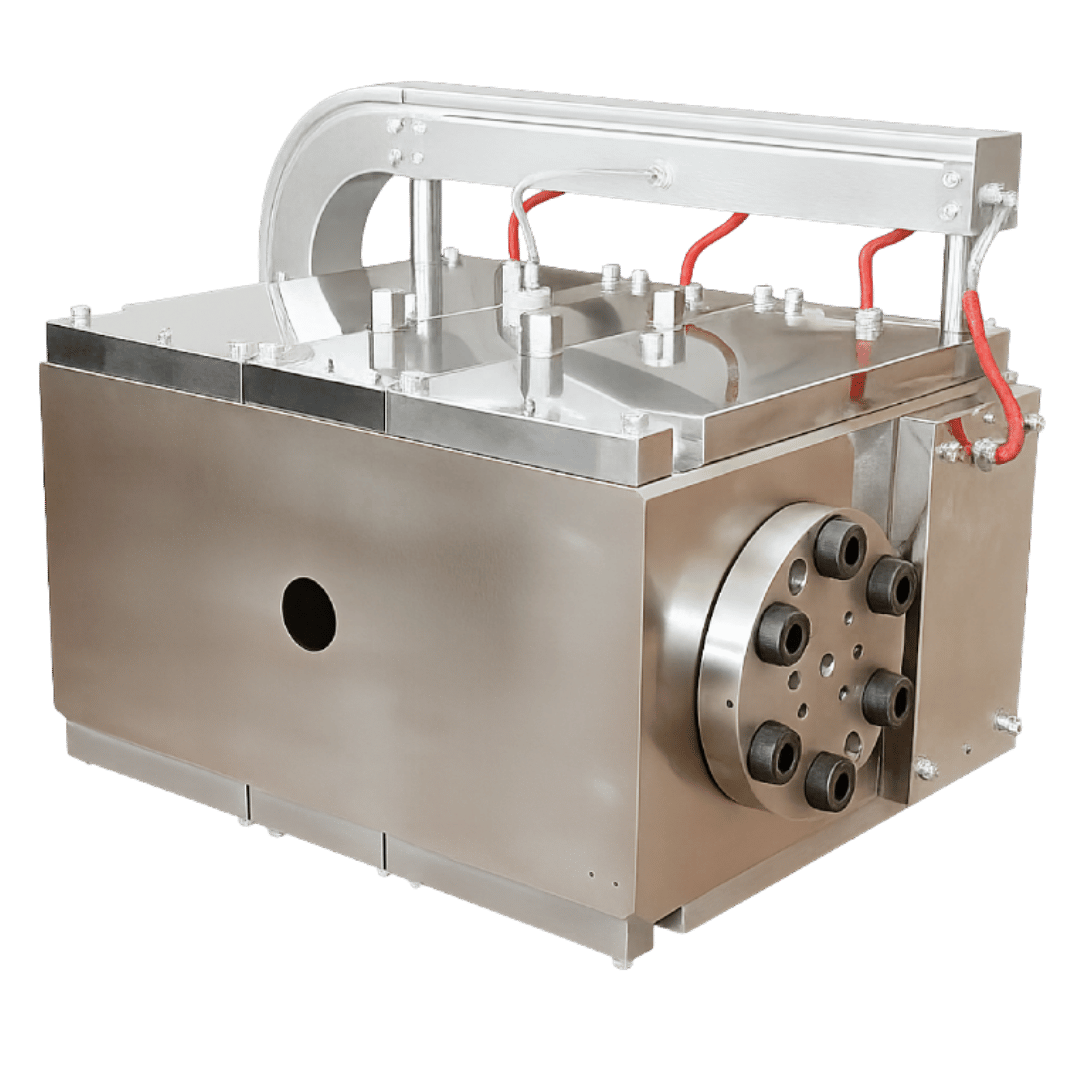
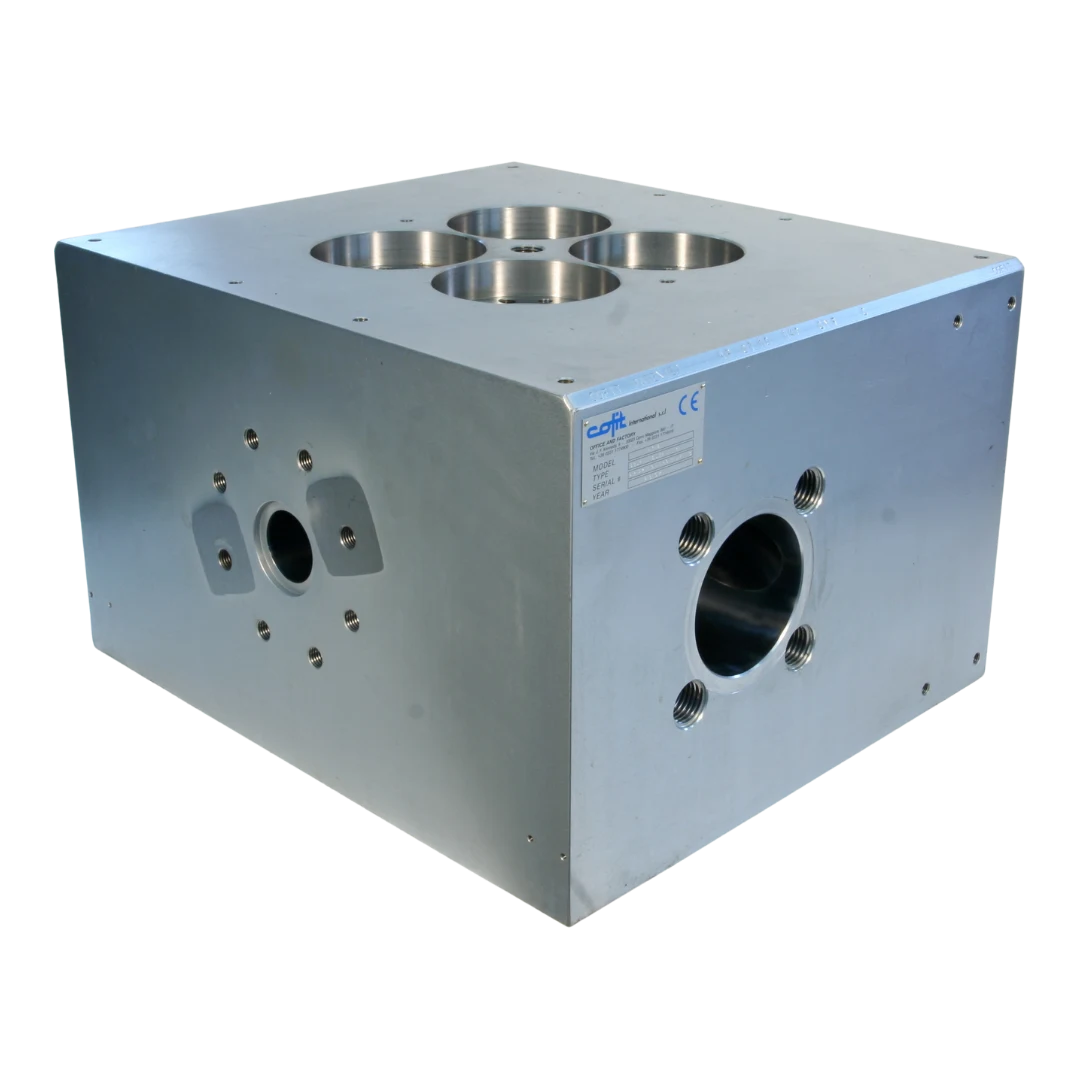
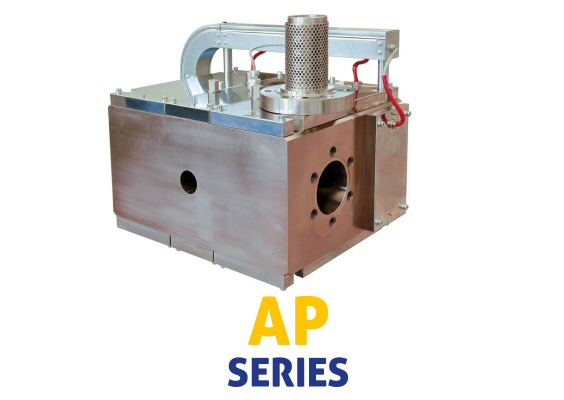
AP Series continuous and self-cleaning double cartridge screen changer

AP screen changer

Continuous Self-Cleaning Filtration for Plastic Extrusion

The AP screen changer delivers continuous, self-cleaning melt filtration — with minimal pressure disturbance — without stopping your extrusion line. Designed for virgin polymer and clean regrind, also with low recycled content, across film, sheet, fiber, and coating applications.

Calculate Your Lost Production Request a Technical Alignment

Why Manual Screen Changes Are a Production Risk

Conventional screen changers interrupt production at every screen change. On high-output lines, every unplanned stop means lost production, pressure instability and start-up scrap.

Calculate Your Lost Production

Continuous Filtration Without Compromise

AP screen changer is a convenient, long-lasting solution for clean and semi-clean applications

1 — Self-cleaning
Cleaned without removing the cartridges

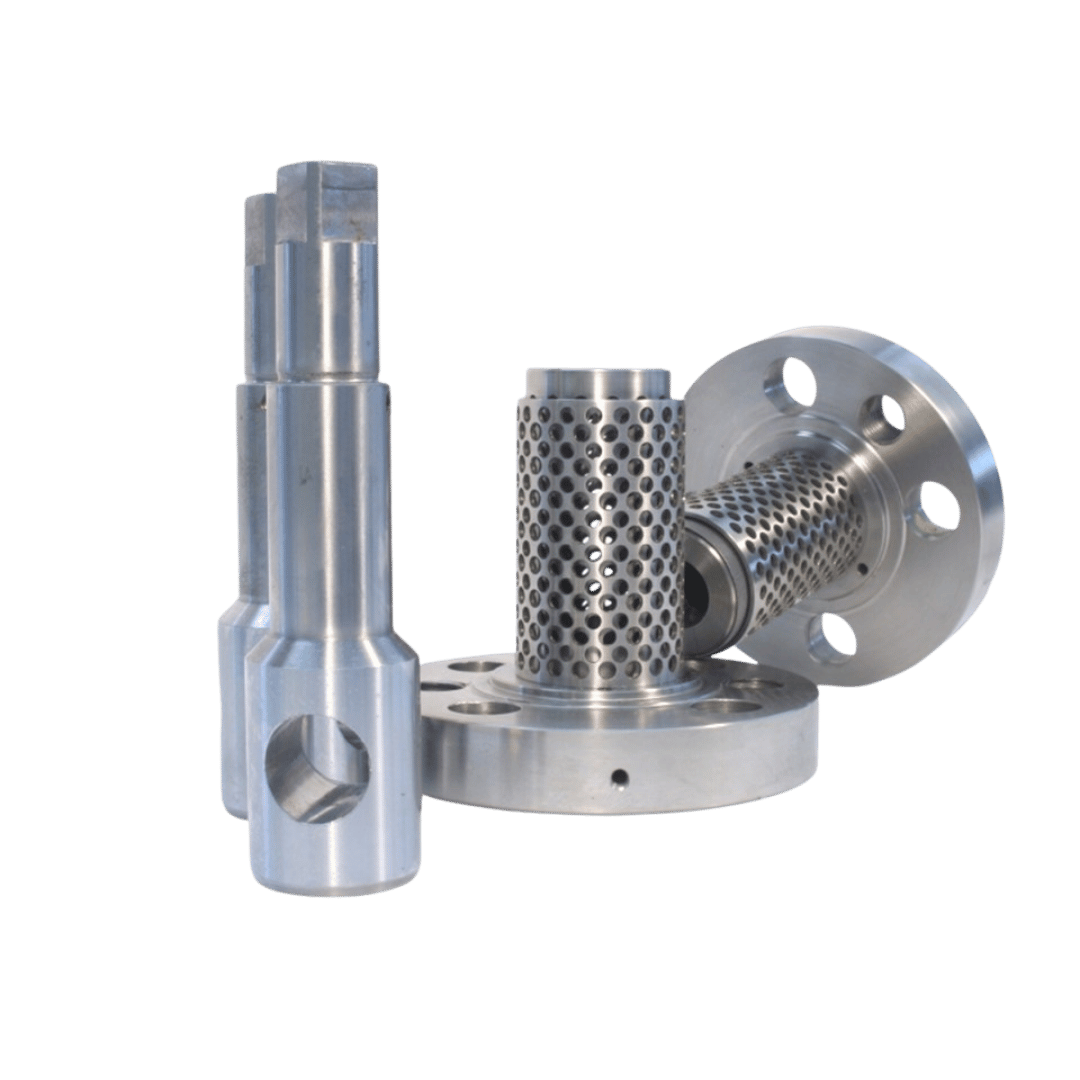
AP filter cartridges are cleaned without being removed from the block. The cleaning cycle is activated by the operator with a key, without stopping the line. The cleaning cycle causes minimal pressure disturbance.

2 — Continuous
No production stops

AP filtering cartridges can be cleaned and replaced without production interruption. The extrusion line runs throughout — no restart cycles, no pressure spikes, no scrap at changeover. Filtration fineness is maintained down to 3 μm continuously.

3 — Convenient
No expensive control units

AP does not require any expensive control panel or hydraulic control units — unlike many competing continuous screen changer designs. The self-cleaning mechanism is integrated and mechanically simple, reducing installation cost and maintenance complexity.

Request a Technical Alignment

Designed for Demanding Applications

AP is optimized for virgin polymer and clean regrind, also with low recycled content, in film, sheet, fiber and most continuous applications where melt quality and uptime are critical.

BOPP Film

Cast Film

Blown Film

Fiber Production

Nonwoven

Nylon

Tapes

Cellulose

Blow Moulding

Sheet Extrusion

Wire & Cable

Pipes

Extrusion Coating

Stretch Film

For application-specific filtration guides: Blown Film Filtration  ·  Sheet Extrusion Filtration

Key Process Benefits

Over 500 bar
Max operating pressure
AP Series
Up to 90%
Downtime reduction
Vs manual screen changers on lines running >3 changes per shift
3 μm
Minimum filtration fineness
Maintained continuously — including fiber spinning, optical film, and food-contact applications
24/7
Non-stop operation
No interruption for filter maintenance — the line runs without unplanned stops

Technical Data

Parameter Specification Notes
Filtration type Continuous, self-cleaning Ensures uninterrupted operation and in-line contaminant removal
Cartridge system Dual parallel cartridges Parallel configuration allows continuous filtration during screen change
Filtration fineness Down to 3 μm Maintained continuously — no interruption during the cleaning cycle
Cleaning cycle activation By the operator, with a key The operator activates the cleaning cycle with a key; the line keeps running during cleaning
Material compatibility Virgin polymer and clean regrind Clean or semi-clean applications, also with low recycled content
Max operating temperature Up to 350°C Designed for high-temperature polymer processing
Max operating pressure Above 500 bar Suitable for high-pressure extrusion applications
Throughput range 5 – 2,000 kg/h Wide operating range depending on configuration and material
Hydraulic control unit Not required Self-cleaning mechanism integrated in the filter housing, no external hydraulic unit
Screen change Without production interruption Continuous operation with no downtime during screen replacement

Resources

Download AP screen changer brochure

Download

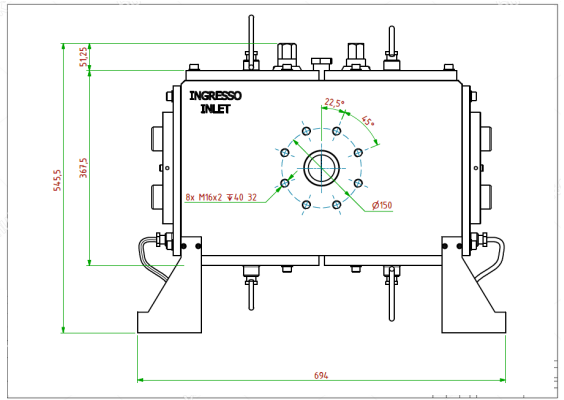
Download AP screen changer layout drawings

Download

Videos

3D Animation

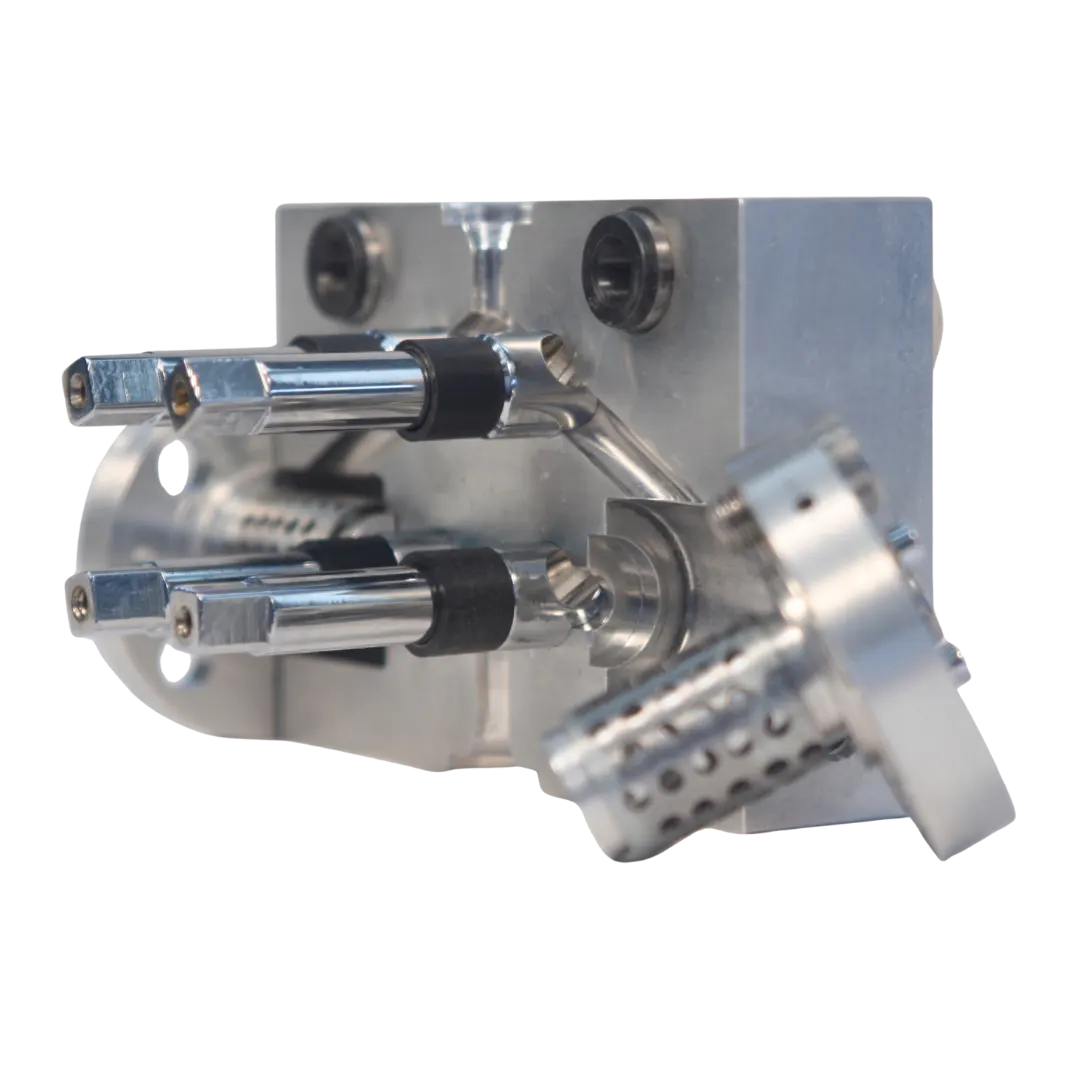
Watch an AP 3D animation: the filtering unit, valves and gaskets, inside AP body, self-cleaning operation

AP Valve Setup

AP set-up: watch how to perform valve adjustment.

Replace AP Gaskets

Watch how to execute AP gasket replacement.

Frequently Asked Questions

To clean the AP, the operator uses a key to actuate the flow valves: the resulting backflush of melt removes the accumulated contaminants from the cartridge screen, while the cartridge remains inside the filter housing and melt continues flowing. During the cleaning cycle, melt continues flowing through the parallel cartridge with minimal pressure disturbance. No screen is removed and the line keeps running.

The AP screen changer achieves filtration fineness down to 3 μm — maintained continuously without line interruption. This covers film, sheet, fiber spinning and coating applications, from standard to high-clarity requirements. For mesh-to-micron conversions, see the Mesh-to-Micron Converter.

No. Unlike many continuous screen changer designs that require hydraulic actuators and a dedicated control panel, the AP operates without any external hydraulic control unit. The self-cleaning mechanism is integrated within the filter housing. This reduces installation cost, eliminates hydraulic maintenance overhead, and simplifies line layout — particularly relevant for retrofitting an existing line.

The AP screen changer is suitable for a wide range of thermoplastic polymers: polyolefins (LDPE, LLDPE, HDPE, PP), engineering polymers (PET, PA, PC, PMMA, ABS), elastomers, biopolymers, and specialty compounds. Designed for virgin polymer, clean regrind and low recycled content. Operating temperature range up to 350°C.

How Much Production Does Your Line Lose at Every Screen Change?

Enter your throughput, screen change frequency, and shift schedule. The calculator shows the production you lose every month and the annual revenue impact — in under two minutes.

Calculate your lost production →
Request a technical alignment with Cofit