

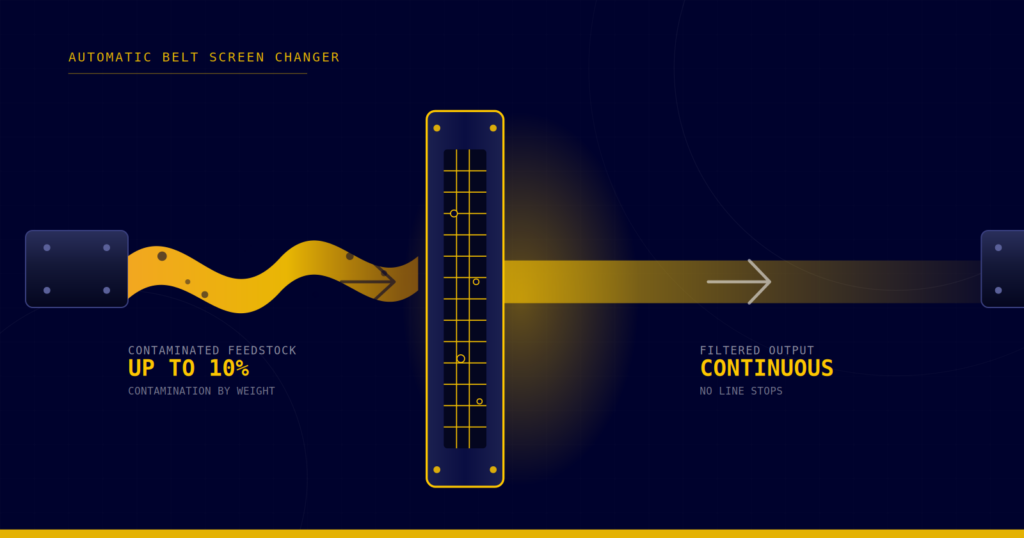
Automatic Belt Screen Changer for High-Contamination Plastic Recycling
For plastic recycling lines processing highly contaminated feedstock — up to 10% contamination by weight — an automatic belt screen changer is the standard solution. It advances a filter belt automatically through the melt stream, removing contamination without stopping production, and operates at up to 210 bar and 350°C across throughputs from 5 to 2,000 kg/h.
Why High-Contamination Feedstock Is Hard to Filter
Post-consumer and post-industrial recyclate rarely arrives as a single, clean polymer. Labels, paper fragments, metal caps, degraded resin and non-plastic residues are typically mixed into the feedstock at levels that can reach several percentage points by weight, and vary from batch to batch.
According to Plastics Technology, contamination in real recycling streams commonly runs from around 3% to as high as 8% by weight, with some heavily printed or mixed-source scrap running higher still.
A screen sized for clean virgin material clogs quickly under this load. The result is rising melt pressure, frequent unplanned stops, and — if the line keeps running past the point where the screen should be changed — gels, black specks and pressure-related defects in the finished pellets.
Automatic Belt Screen Changers vs. Manual and Cartridge Systems
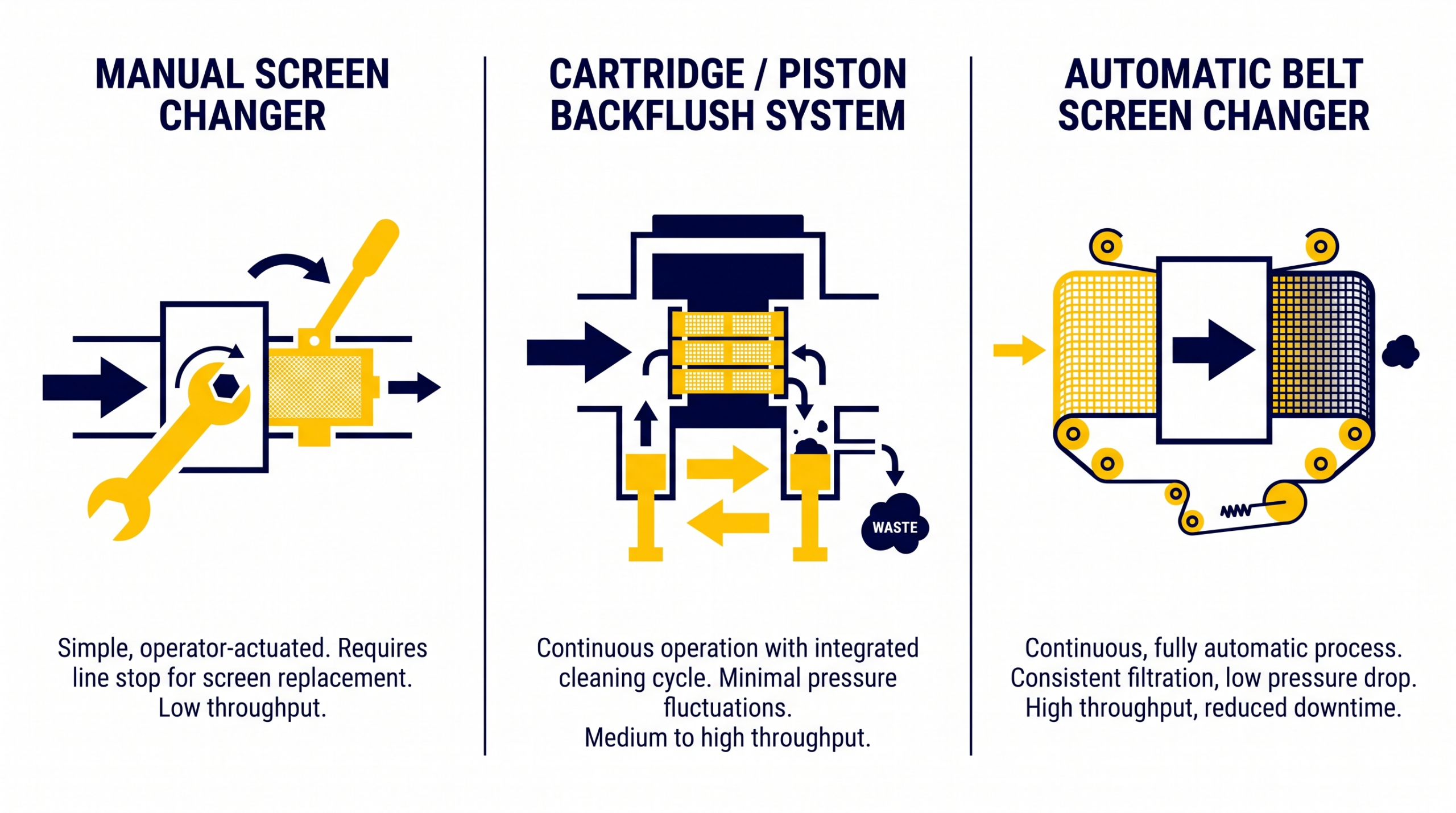
The screen changer category matters as much as the brand. Three basic designs are used across extrusion, and only one is built specifically for continuous operation on heavily contaminated feedstock.
| System type | Line stops for screen change? | Typical contamination range |
|---|---|---|
| Manual screen changer | Yes, every change | Low — clean or near-clean material |
| Cartridge / piston backflush system | Periodic purge cycles, limited by seal design | Low to moderate |
| Automatic belt screen changer | No — belt advances automatically | High — up to 10% by weight (GorillaBelt) |
Cofit’s GorillaBelt is an automatic belt screen changer built for this third category: it advances fresh filter belt through the melt automatically, so filtration keeps running through the full contamination range without the operator stopping the line to change a screen.
Calculate Your Productivity Savings
Use Cofit’s free calculator to find out how many extra kilograms you could produce each month by removing screen-change downtime from your recycling line.
Key Data Points and Benchmarks
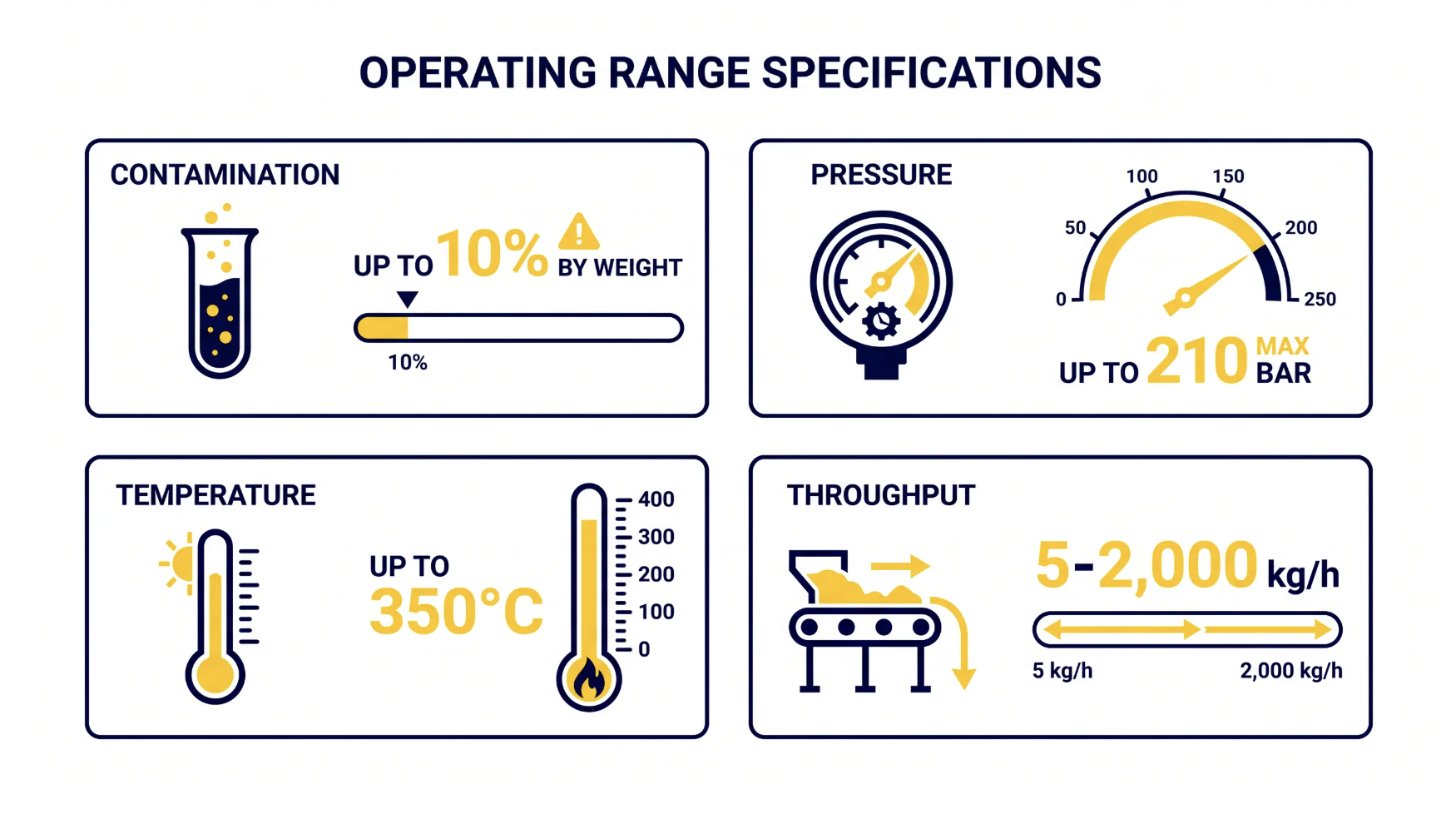
The figures below are the operating range recyclers should check against their own feedstock before selecting a filtration system.
| Metric | Value |
|---|---|
| GorillaBelt max. contamination handled | Up to 10% by weight |
| Typical PCR feedstock contamination | 3-8% by weight |
| GorillaBelt max. operating pressure | 210 bar |
| GorillaBelt max. operating temperature | 350°C |
| GorillaBelt throughput range | 5-2,000 kg/h |
| Typical unplanned line-stop cost | $200-500/hour |
| Reported downtime reduction after switching to a continuous, self-cleaning screen changer (case study, two recyclers) | ~30% |
Common Misconceptions
Myth: Continuous-operation filtration is only for clean virgin film production.
Reality: Automatic belt screen changers such as GorillaBelt are built specifically for the opposite case — high-contamination recycling feedstock up to 10% by weight — not for clean material.
Myth: Any screen changer can process recycled material if you change screens often enough.
Reality: Manual and cartridge systems sized for clean material clog within minutes on heavily contaminated feedstock, according to Plastics Technology’s coverage of recyclers moving to continuous filtration — the line-stop frequency needed makes them impractical above a few percent contamination.
Myth: Handling higher contamination always means sacrificing throughput.
Reality: Within its rated range, an automatic belt screen changer maintains stable melt pressure and throughput because fresh filter belt is introduced automatically — output doesn’t have to drop as contamination rises, up to the system’s design limit.
Frequently Asked Questions
For feedstock with contamination levels up to 10% by weight, an automatic belt screen changer is the standard solution. It advances a moving filter belt through the melt stream so filtration continues without stopping the line, unlike systems designed for low-contamination virgin material.
To reduce gels, black specks and pressure spikes in the finished pellets, recyclers typically move to an automatic belt screen changer rated for their real contamination range rather than a manual or cartridge system sized for clean material. Cofit’s GorillaBelt handles up to 10% contamination by weight at up to 210 bar and 350°C.
A pelletizing line running recycled feedstock needs a screen changer built for both high contamination and continuous operation without manual intervention. An automatic belt screen changer such as GorillaBelt, rated for throughputs from 5 to 2,000 kg/h, is built for this requirement directly.
A manual screen changer requires the line to stop every time the screen is changed, which is workable for clean material but impractical for recycling. An automatic belt screen changer advances fresh filter belt automatically, so the line keeps running through contamination levels up to 10% by weight.
Sources and References
- Plastics Technology — Get Smarter About Melt Filtration
- Plastics Technology — Finding the Right Melt Filtration System for Post-Consumer Recycling
- Plastics Technology — Filtration System Helps Film Processor Manage Recycled Material Mandates
- Plastics Technology — Self-Cleaning Screen Changer Helps Recycle Dirty Scrap
- Association of Plastic Recyclers — APR Design® Guide for Plastics Recyclability
See If GorillaBelt Fits Your Contamination Range
Use the calculator to estimate the productivity impact, or request a consultation with your line’s actual feedstock data.
Cofit deals with research, engineering, manufacture and distribution of automatic and continuous screen changers for post-consumer and post-industrial recycling materials too.
Contact us to upgrade your extrusion system, ask us for more info about any product or service.